A hand-painted ocular prosthesis, designed to match your natural eye in colour, depth and detail. For patients living with eye loss after trauma, surgery, phthisis bulbi, microphthalmia or congenital absence. Lightweight medical-grade acrylic. Comfortable from day one. Life-changing from the very first fitting.
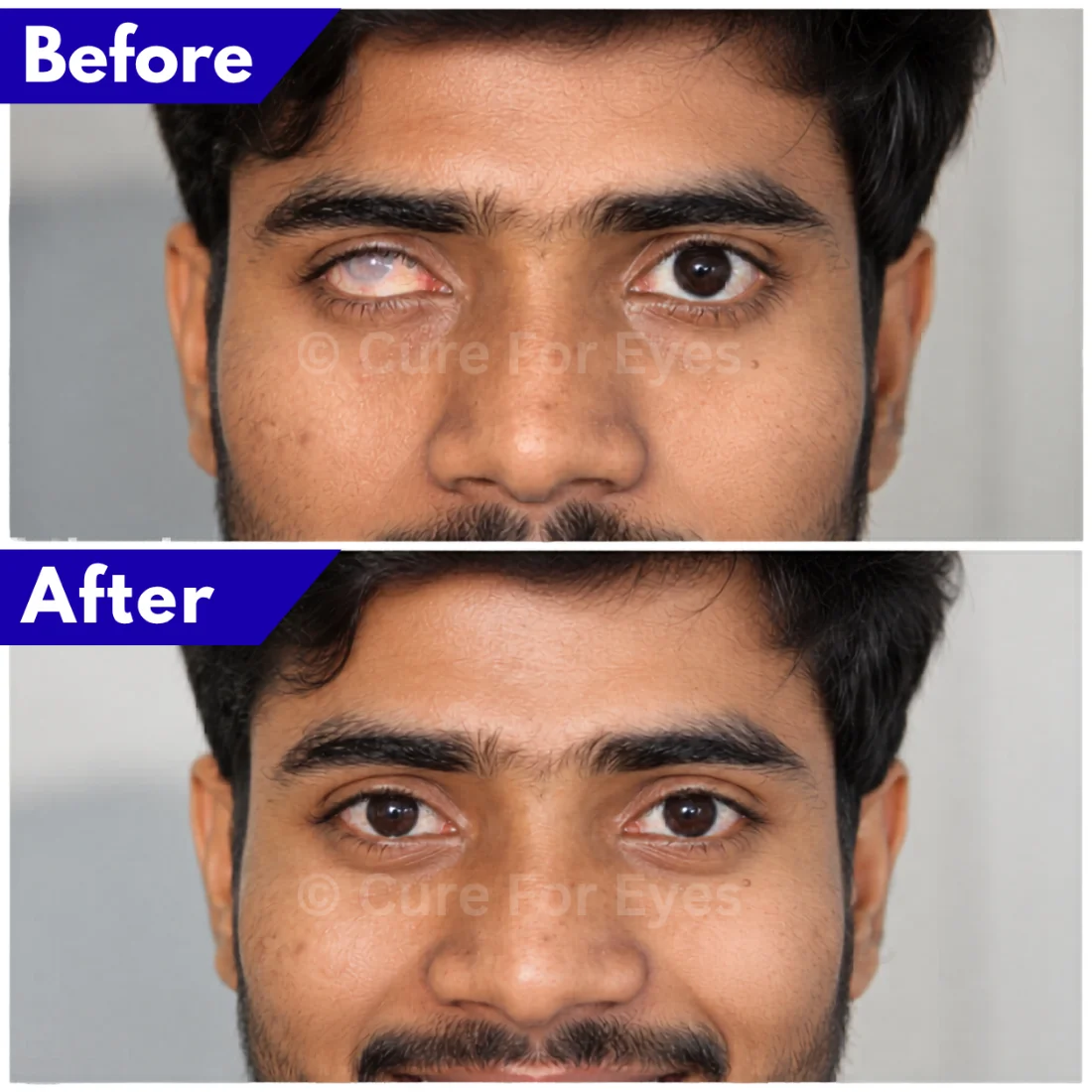
Living with eye loss affects far more than vision in one eye. It changes facial symmetry, how others react to you, how you see yourself in the mirror and even how the bones of the socket grow in children. A custom ocular prosthesis quietly rebuilds all of that - cosmetically, structurally and emotionally.
Road accidents, industrial injuries, burns or sharp injuries that have ended in evisceration or enucleation surgery. A custom prosthesis is fitted once the socket has healed.
Learn more →Where the entire eyeball has been surgically removed - usually after tumours such as retinoblastoma, choroidal melanoma or end-stage infection. An implant + custom shell restores volume.
Learn more →The inner contents of the eye have been removed but the white scleral shell remains. A thinner custom prosthesis sits over the socket to restore appearance and motility.
Learn more →An end-stage, painful or blind eye that has shrunk and turned inward. A thin scleral-shell prosthesis can be worn over it - usually with no need for surgery first.
Learn more →Children born with a small or absent eye. Early prosthetic and conformer fitting in infancy is critical - it helps the bony orbit and eyelids grow symmetrically.
Learn more →A non-functional but intact eye with corneal scarring, opacity or staphyloma that affects appearance. A custom scleral cover-shell is often a faster, surgery-free option.
Learn more →Eyes blinded by chronic glaucoma, infection or vascular events that have become uncomfortable. A scleral shell can reduce light sensitivity and restore cosmetic appearance.
Learn more →Already wearing an older or poorly fitting prosthesis? Sockets change over time. A new custom prosthesis or professional polish can dramatically improve comfort and look.
Learn more →Book a socket assessment. We examine your socket, take photos of your natural eye, and tell you honestly whether a prosthesis or a cover-shell will help - no obligations.
Book free consult →Stock or ready-made prosthetic eyes are mass-produced in fixed shapes and colours. They rarely fit perfectly, can rotate, and almost always look "off". A custom ocular prosthesis is shaped from a precise impression of your unique socket and painted by hand against a photograph of your other eye. The result is something that fits exactly, moves naturally and matches in every detail.
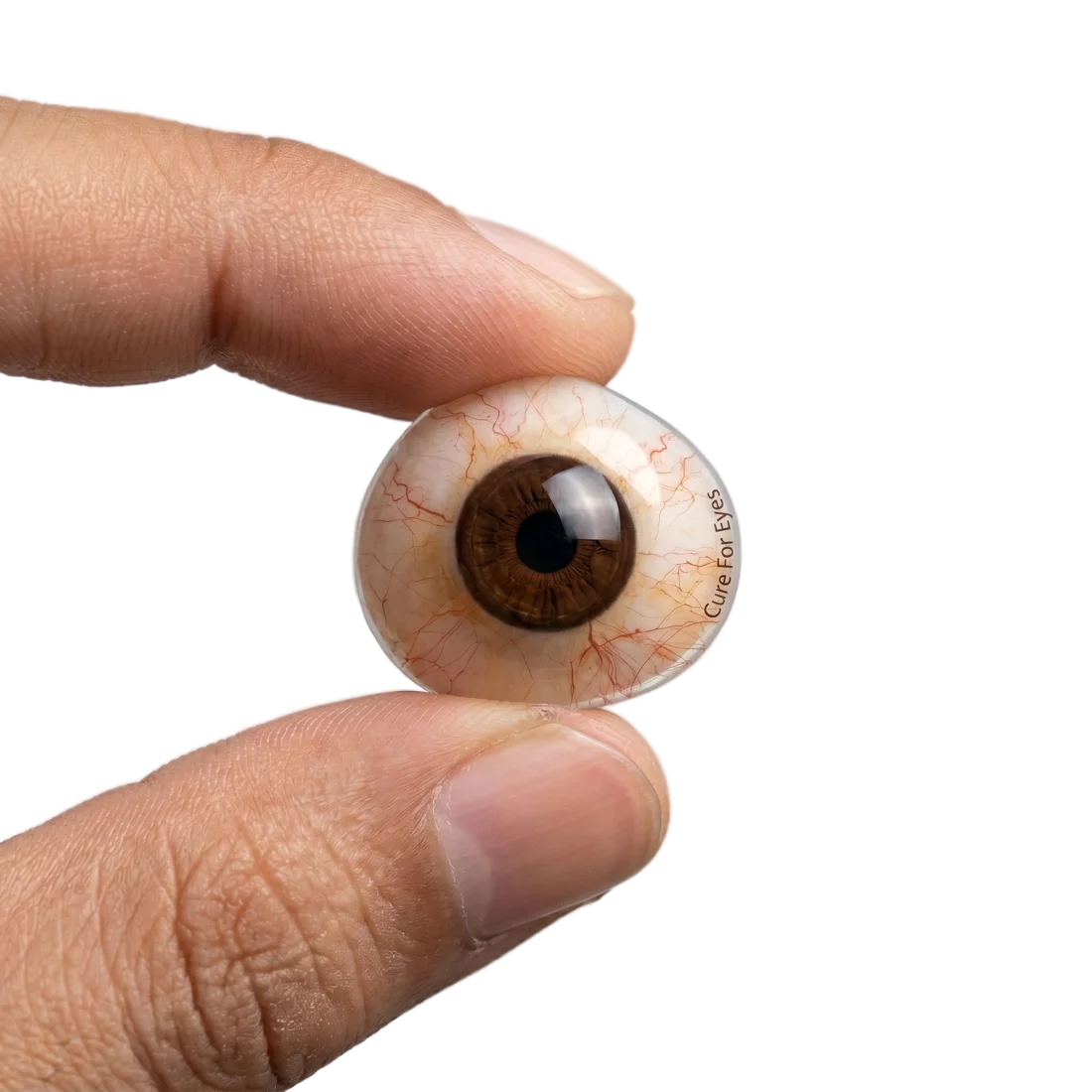
A soft, non-irritating alginate material is gently placed in the socket for a few minutes. It captures every contour - depth, width, fornices - so the prosthesis sits exactly the way it should.
From the impression we shape a wax model and try it in your socket. We fine-tune lid contour, gaze direction and depth so the eye sits and moves naturally before any acrylic is processed.
Using a photograph and live observation of your other eye, the ocularist paints the iris colour, pupil size, scleral tone and even the faint blood vessels. No two custom prostheses are ever alike.
The painted prosthesis is processed in medical-grade PMMA, polished to a high glass-like finish, then fitted. You go home with insertion/removal training, lubricants and a 6-month follow-up plan.
After a careful socket assessment, your ocularist will recommend the prosthesis that best balances cosmetic outcome, comfort and the long-term health of your socket.
A fully individualised ocular prosthesis. The shape is moulded from your unique socket impression and the iris, pupil, scleral tone and vasculature are hand-painted to match your other eye. The gold standard for cosmetic outcome and long-term socket health.
A pre-manufactured prosthesis in standard shapes and colours, modified and polished to fit your socket. A practical first-step option, useful when an immediate prosthesis is needed or as an interim solution while a custom one is being made.
Every prosthesis is a medical device and a piece of bespoke craft. We invest the time to get it right the first time - with detailed assessment, careful impressions and as many fitting visits as needed at no extra cost.
Socket examination, photographs of your natural eye, discussion of your goals and expectations. Honest advice on what is achievable.
A gentle alginate impression captures the exact shape, depth and fornices of your socket. Painless and finished in minutes.
A wax pattern is fitted in your socket so we can refine shape, gaze direction and lid contour before final processing.
The iris, pupil, sclera and conjunctival vasculature are painted against your natural eye. The shell is then cured in PMMA.
Final fit, insertion & removal training, hygiene plan. 1-week, 1-month and 6-month follow-ups are included with every fitting.
Most patients with eye loss or a disfigured non-functional eye are excellent candidates for a custom ocular prosthesis. Here is the broad picture - only a socket assessment can give a definitive answer.
| For an empty or disfigured socket | No Prosthesis | Eye Patch | Stock Prosthesis | Custom Hand-Painted |
|---|---|---|---|---|
| Lifelike, colour-matched appearance | No | No | Approximate | Yes - hand-painted |
| Maintains facial symmetry | No | No | Partial | Yes |
| Moves with the other eye | No | No | Limited | Yes (with implant) |
| Prevents socket contracture | No | No | Yes | Yes - optimal |
| Supports paediatric orbit growth | No | No | Partial | Yes - ideal |
| Comfort for full-day wear | - | Limited | Variable | Excellent |
| Typical lifespan | - | Months | 2–3 yrs | 4–6 yrs |
A custom artificial eye is built to last - provided you treat it like a fine medical device. The good news: care is straightforward and quickly becomes routine.
Use preservative-free lubricating drops a few times a day. Avoid rubbing the eyelid - gentle dabbing only.
Remove once a week, wash with mild soap and lukewarm water, rinse thoroughly and reinsert. Never use alcohol or harsh chemicals.
An annual in-clinic polish removes protein deposits and micro-scratches, restoring the glass-like surface and patient comfort.
Sockets change shape over time. A periodic refit (or full replacement) keeps your prosthesis comfortable, symmetric and lifelike.
"Apne accident ke baad do saal tak maine photos khichwana hi band kardiya. Par is artificial eye ne sab kuch badal diya."
Ek industrial injury ki wajah se meri right eye chali gayi thi. uss time mujhe ek stock prosthesis laga diya gaya tha jo hamesha ajeeb hi lagta tha - uska colour, uski gaze, sab kuch alag hi pata chalta tha. Phir CFE ki team ne ek impression liya aur us se properly hand-paint karke nayi artificial eye banai. Ab toh mere colleagues tak notice nahi kar paate!
"Mere bete ko birth se hi microphthalmia tha. Conformers aur prosthesis ki help se hi uska orbit bilkul normally grow ho paaya."
"Uske second month se hi humne use dheere-dheere bade size ke conformers fit karwane shuru kar diye the, aur 3 saal ki age mein use apni pehli hand-painted artificial eye mili. Uska face ekdum beautifully sahi lagta hai, aur school mein uska confidence bhi acha hai."
"Mujhe 4 saal ki age mein retinoblastoma hogya tha. Ab 20 saal ki umar mein nayi artificial eye lagi toh aisa lag raha hai jaise mujhe mera face wapas mil gaya ho."
Main lagbhag pichle 10 saalo se same ek hi artificial eye pehan raha tha, aur mera socket poori tarah change ho chuka tha. Yeh naya refit ekdum painless tha, naye iris ka colour ekdum real match hua hai, aur life mein pehli baar main video calls par khud ko dekh kar sach mein comfortable feel kar raha hoon.
"Phthisis bulbi made my eye look shrunken. A thin scleral shell fixed it without any surgery."
I'd been told I'd need surgical evisceration before any prosthesis could be made. At CFE they took an impression directly over the existing eye and fitted a thin scleral cover-shell. It looks completely normal and I avoided the operating room entirely.
"My old prosthesis was painful by lunchtime. The new one I can wear from morning till bedtime."
My previous prosthesis was a stock eye polished to fit and after a few years it was rubbing constantly. The custom impression makes such a difference - the new one sits like it belongs and the dryness is half what it used to be.
"Melanoma ke liye enucleation hone ke baad, main bahut darr gayi thi ki ab aage kya hoga. Par sach batau toh fitting process bahut aaram se hua."
"Mujhe lag raha tha ki sab kuch ekdum typical cold aur clinical sa hoga. Par iski jagah team ne mujhe har ek step aaram se samjhaya, bahut gently mera impression liya, aur meri left eye ko dekh kar right eye ko paint kiya. Match itna perfect hua hai ki kya hi bataun. Jab maine pehli baar khud ko mirror mein dekha, toh mere sach mein aansu aa gaye the."
Modern artificial eyes are not glass. They are made from medical-grade PMMA (poly-methyl methacrylate) acrylic - the same family of biocompatible plastics used in dental and intraocular implants. PMMA is lightweight, easy to polish to a glass-like shine, hypoallergenic and safe to wear for years. "Glass eye" is just an old name that has stuck around.
Yes. A custom hand-painted prosthesis is matched against your natural eye in iris pattern, pupil size, scleral tone and even the fine conjunctival vasculature. In normal social settings the prosthesis is virtually undetectable. When fitted over a well-placed orbital implant it also moves with the muscles of the socket, mimicking the gaze of your seeing eye.
No. Both the socket impression and the fitting itself are painless. The impression material is a soft alginate that sits in the socket for a few minutes - similar to a dental impression but gentler. Some patients feel mild socket pressure or watery discharge for the first few days as the tissues adapt; this settles quickly.
Yes. Once adapted, most patients wear their prosthesis from morning until bedtime and only remove it for a weekly clean. With proper hygiene, daily lubricating drops and an annual professional polish, a well-fitted prosthesis remains comfortable through a full day.
Most ocularists recommend keeping the prosthesis in overnight, because removing and reinserting it frequently irritates the conjunctival lining. You only need to remove it for a thorough clean every 1–2 weeks, or sooner if you notice mucus build-up or discomfort.
A well-cared-for custom PMMA prosthesis typically lasts 4–6 years. Stock prostheses generally last 2–3 years. The socket itself changes over time - especially in children and in the years after surgery - so we recommend an annual professional polish and a refit every 5 years to keep comfort and appearance optimal.
Cost depends on whether the prosthesis is custom hand-painted or a modified stock prosthesis, and on socket complexity (post-enucleation vs cover-shell over phthisis, for example). The fitting fee includes the consultation, impression, fabrication, hand-painting and dispensing visits, plus 6 months of follow-up adjustments. EMI options are available. Please contact our clinic for a personalised quote - we never quote blind.
Many Indian insurance providers reimburse medically indicated ocular prostheses, especially when the eye loss followed trauma, tumour or surgical removal documented by an ophthalmologist. We provide all the diagnostic reports, prescriptions and invoices required to support a claim, and our team can guide you through the paperwork.
Typically 6–8 weeks after enucleation or evisceration, once the socket has healed and the swelling has settled. Between surgery and prosthesis, your surgeon will keep a clear plastic "conformer" in the socket to preserve its shape. In children, fitting begins much earlier - sometimes within the first few weeks of life - with progressively larger conformers and an early prosthesis to support facial growth.
Yes - and for children born with anophthalmia or microphthalmia, early prosthetic care is essential for normal facial bone and eyelid development. We fit graduated conformers in infancy and transition to a hand-painted prosthesis as the child grows. The prosthesis is changed every 1–2 years through childhood.
Book a no-obligation prosthesis consultation at our Gurugram clinic. We'll examine your socket, photograph your natural eye, walk you through every option and tell you honestly what is achievable - and what it will cost.
